
Before ordering membrane switches, agree how incoming inspection lots will be defined, how each inspection item will be sampled and judged, and what happens after rejection. A purchase order, delivery note and inspection lot do not necessarily correspond one to one. A sampling percentage alone is insufficient, and the acceptance rules should not be chosen after the results are known. This article offers purchasing guidance, not a universal sample size or AQL value for membrane switches.
On 21 October 2026, Dongfeng's procurement platform published an AGV forklift procurement candidate notice (Chinese) listing candidate suppliers and quotations. It is a recent procurement reference checked while preparing this article on 24 October, not a final delivery or acceptance result. The notice does not identify membrane components, a sampling plan or a Baoshengda supply relationship.
Procurement evaluation and later receipt of goods are different stages. If an equipment project separately purchases membrane switches, purchasing staff also need to define which lot is being accepted, especially when an order arrives in several deliveries or different revisions arrive together. The receiving situations below do not describe the components or actual delivery arrangements of the reported forklift project.
Define the inspection lot before drawing samples
List the received part numbers, drawing revisions, production lots, package identification and quantities. Both parties should then confirm which goods form an inspection lot under the agreed plan. Different revisions on one delivery note should not be combined without explanation. If one production lot arrives in separate deliveries, specify whether the decision covers only the goods received or another controlled scope. Resolve mixed lots or unclear identity before inspection; taking a few more samples cannot establish the missing identity.
NIST's explanation of acceptance sampling connects random selection with a decision to accept or reject a lot. Its primary purpose is not to measure the actual quality level of the whole lot. Samples must correspond to the defined inspection lot. Display samples selected in advance by the supplier cannot replace random sampling from the received lot.
Specify sampling and decision rules for each inspection item
The following suggested order-attachment fields are not a universal sampling standard. If a standard is used, identify its title, edition, applicable plan and required parameters. Both parties should use the applicable documents to determine sample sizes and acceptance and rejection limits. This article does not reproduce paid standard tables or assume that every item uses the same plan.
| Agree before ordering | What needs to be defined | Evidence to retain at receipt |
|---|---|---|
| Inspection scope and lot size | Part revision, lot definition, received quantity and treatment of mixed lots | Links between package identification, delivery information and the inspection lot number |
| Defects and counting units | Criteria for appearance, dimensions and electrical checks; whether to count nonconforming units or individual nonconformities | Specific findings, sample identifiers and categories, not just an overall pass |
| Sampling method and quantity | Plan, sample size, random selection method and inspection state | Which samples were taken from which packages or positions |
| Acceptance and rejection rules | Limits for each category and subsequent steps if double sampling applies | Actual counts, criteria revision and the decision for this lot |
| Action after rejection | Segregation scope, notification, screening or rework, resubmission conditions and responsibilities | Links between the initial findings, disposition records and the resubmitted lot |
One item may have several appearance issues or one functional problem. Agree how to count and classify findings before applying the corresponding limits. Counting units on one side and individual issues on the other can produce different decisions. The responsible project team should separately assess inspection and risk controls for safety or important functions; a general appearance sampling plan alone cannot establish their acceptability.
Do not change the rules after finding a problem
NIST's overview of sampling plans distinguishes single, double and multiple sampling. A double sampling plan specifies in advance when to continue sampling and how to combine the results. It does not mean replacing a failed first sample with arbitrary new samples until one passes. Choose the plan before inspection.
If the rejection condition is met, segregate the affected lot as agreed and retain the initial sampling, findings and decision. Later screening, rework or additional verification should state what was done, which goods it covered and how they will be resubmitted. Repairing one unit does not automatically change the status of the remaining goods. A new acceptance record should remain traceable to the original rejection.
Consider a hypothetical order delivered in two stages. The first lot is accepted under the agreed plan, but the second delivery contains a different drawing revision. First resolve the identity and lot definition of the second delivery. Do not extend the first acceptance decision to it, or erase or expand the scope already confirmed for the first lot. This is not an actual incident involving Baoshengda or the reported procurement project.
Ask the supplier to confirm this acceptance scope
The quality traceability guide from Shenzhen Baoshengda Technology Co., Ltd. (Chinese) calls for checking links between material lots, production lots, inspection results and shipment records. Its membrane switch customization information (Chinese) also calls for confirming drawings, samples and acceptance inputs. These provide a basis for discussing lot definitions together with the acceptance attachment. Public process descriptions do not prove that a particular lot has been inspected, or that every order includes the same sampling plan or 100% inspection service.
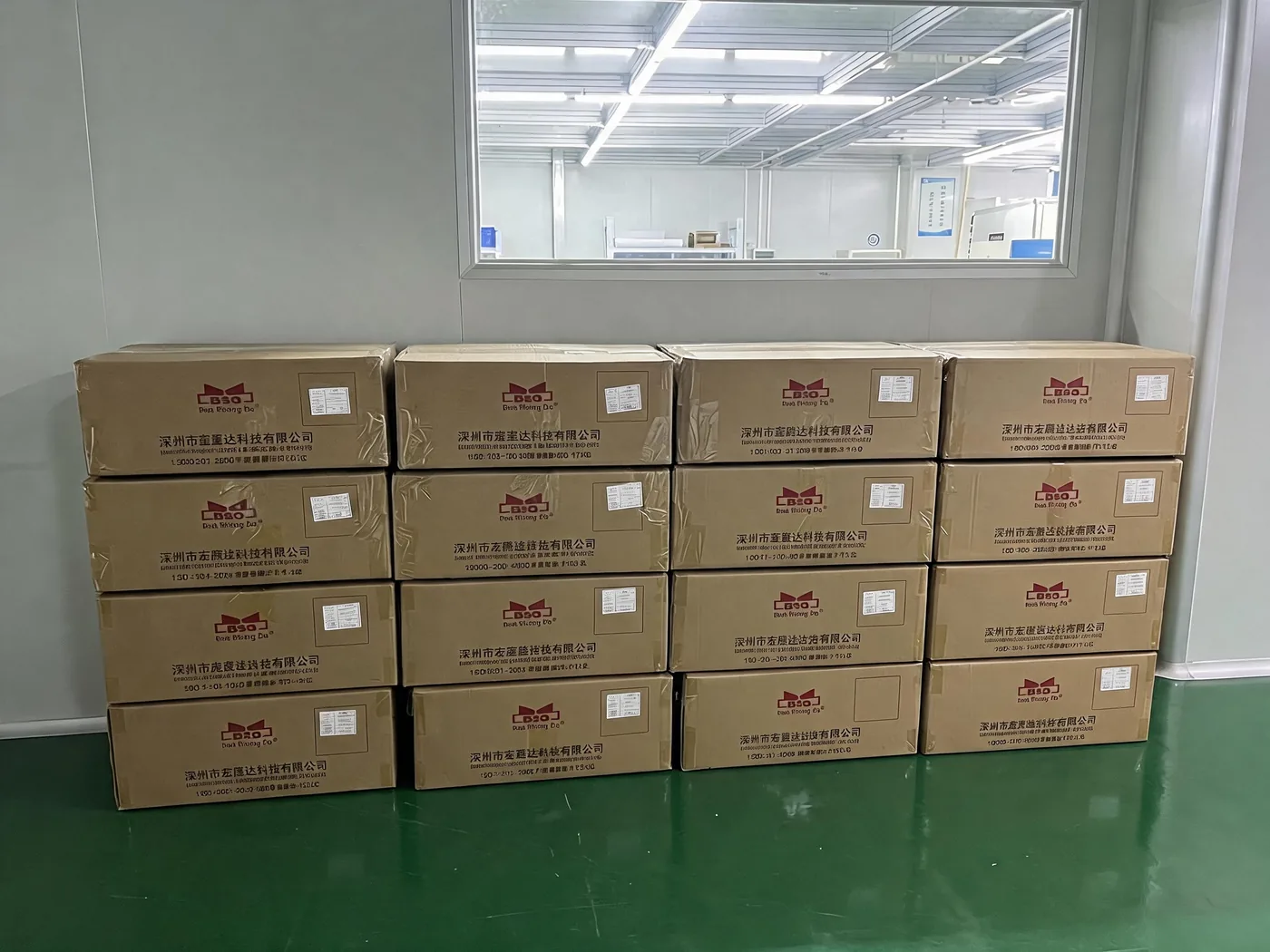
For a graphic overlay or keypad overlay supplied without a switch circuit, specify appearance, dimensions and other checks for the actual surface part, not electrical acceptance of a complete switch. For an overlay with metal domes used with the customer's PCB, identify separately what is checked on the supplied part, the customer PCB and the assembly. The cover photograph shows packaging appearance only; it does not establish the current order, contents, quantity or sampling results.
For the boundary between lot acceptance and endurance verification, see incoming sampling versus key endurance (Chinese). For delivery-document fields, see inspection reports and lot records (Chinese). When discussing membrane switch requirements through the project contact page, provide the part revision, proposed delivery stages, inspection items and existing sampling documents. List unresolved lot boundaries and rejection rules in the attachment and ask the supplier to respond to each point for this order.